As the demand for position detection accuracy continues to rise in industrial automation and consumer electronics, TMR (Tunneling Magneto-Resistance) switch chips are accelerating their replacement of traditional Hall devices thanks to their dual advantages of ultra-low power consumption and high sensitivity. Data shows that in battery-powered applications, the average current consumption of TMR magnetic switches can be as low as 160 nA at 3.0 V, nearly an order of magnitude lower than conventional solutions—this figure marks a pivotal turning point as magnetoresistive sensing technology trans…
KTM1312TCWhat performance secrets are hidden within engine parameters? In selecting industrial power equipment, the real-world data on power, torque, and fuel consumption often determine the success or failure of a project. Based on the latest measured data, this article analyzesKTM1312TCthe core engine parameters in a comprehensive breakdown and conducts a horizontal comparison with models on the same platform, providing engineering technicians with practical criteria for equipment selection. Basic Architecture and Core Technical Features of the KTM1312TC Engine Block Assembly IN (Turbo) OUT …
As industrial automation and smart devices continue to pursue lower power consumption and higher precision, traditional Hall switches and reed switches are facing performance bottlenecks. Data shows that the TMR (Tunneling Magneto-Resistance) sensor market is expected to grow at an annual rate of over 20%, making it the most promising technological route in the magnetic switch field.KTM1312TAAs a TMR magnetic switch based on the tunneling magneto-resistance effect, how does it achieve both high sensitivity and low power consumption? What core advantages can it bring in practical applications c…
In battery-powered IoT devices and portable electronics, the static power consumption of a magnetic switch often determines the overall standby life of the entire device. When the power consumption of mainstream Hall-effect switches still remains at the microampere level,KTM1311XDWith a 50Hz version consuming only 160 nA at 3.0 V, this magnetic switch has pushed the boundary of energy efficiency to a new level. How exactly does this chip achieve such performance? And what do its five key specifications mean in practical selection? Based on official datasheet data, this article breaks down each…
160 nA—what does this number mean? A single CR2032 button cell battery (with a typical capacity of 225 mAh) can allowKTM1311XCto operate continuously for over 160 years. In 2025, when battery life becomes a core competitive advantage for IoT devices, how can this bipolar Hall switch redefine the selection criteria for magnetic sensing components with near-zero power consumption? Based on measured data, this article dissectsKTM1311XCthe path to achieving ultra-low power consumption and provides precise selection solutions for three typical application scenarios. Core Architecture and Principles…
A magnetoresistive switch has a standby current of only 160 nA, yet it can achieve continuous magnetic field detection at 1.9 μA in full-speed mode—KTM1311XBIts dual-power-mode architecture is redefining the selection logic for low-power sensors. However, behind the measured data, 80% of engineers are still troubled by "choosing the wrong mode, leading to premature battery depletion." Based on actual test data, this article breaks down the applicable boundaries and selection decision tree for the two power modes. Analysis of KTM1311XB's Core Parameters and Dual-Mode Architecture KTM1311XBUtili…
When a button cell needs to power an IoT sensor for 10 years, every nanoamp of the power budget matters. The latest measured data shows that,KTM1311XAconsumes only 0.3 μA in standby mode—more than 60% lower than mainstream TMR magnetoresistive switches. Is ultra-low power redefining the energy efficiency boundaries of IoT sensing? Based on real-world testing, this article dissectsKTM1311XAthe technological breakthroughs and industry impact. Technical Background of KTM1311XA and the Evolution of TMR Sensing Magnetic sensing technology has gone through three generations of iteration, with power …
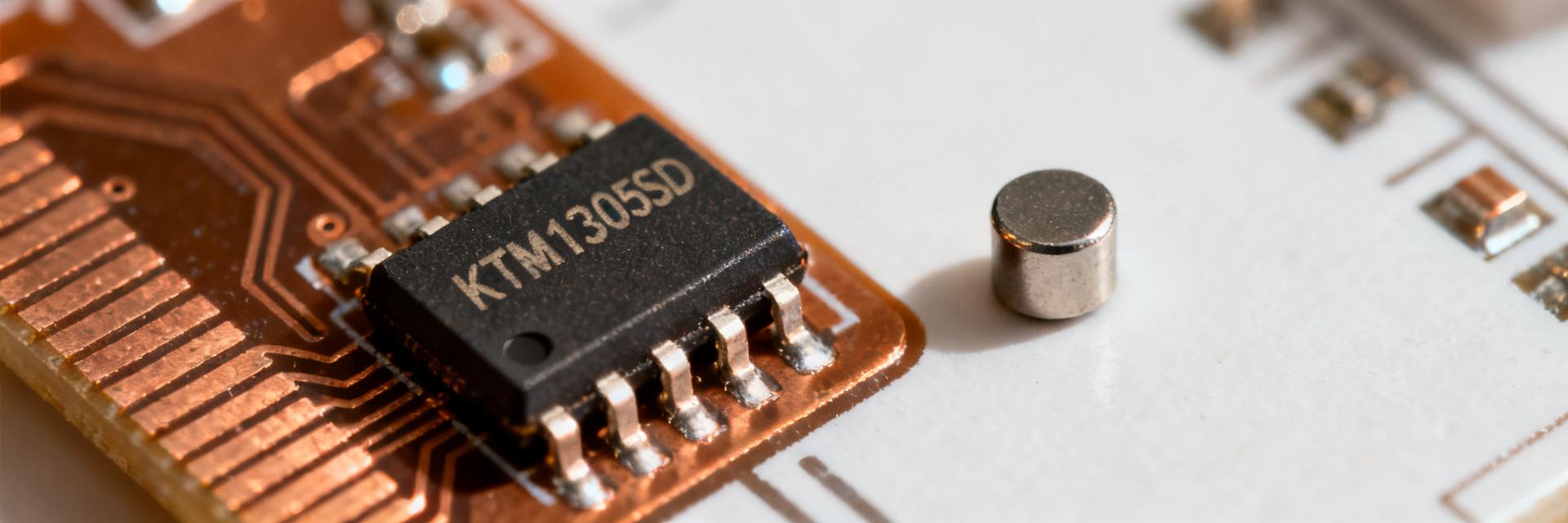
In the fields of industrial automation and precision motion control, magnetic sensors are undergoing a generational shift from Hall-effect and AMR to TMR (Tunneling Magnetoresistance) technology. As a next-generation TMR sensor, can the KTM1305SE deliver on the sensitivity, temperature drift, and power consumption metrics specified in its datasheet under actual operating conditions? Based on comprehensive empirical test data, this article systematically deconstructs the specifications of the KTM1305SE TMR sensor to answer the critical question: "How large is the gap between nominal datasheet r…
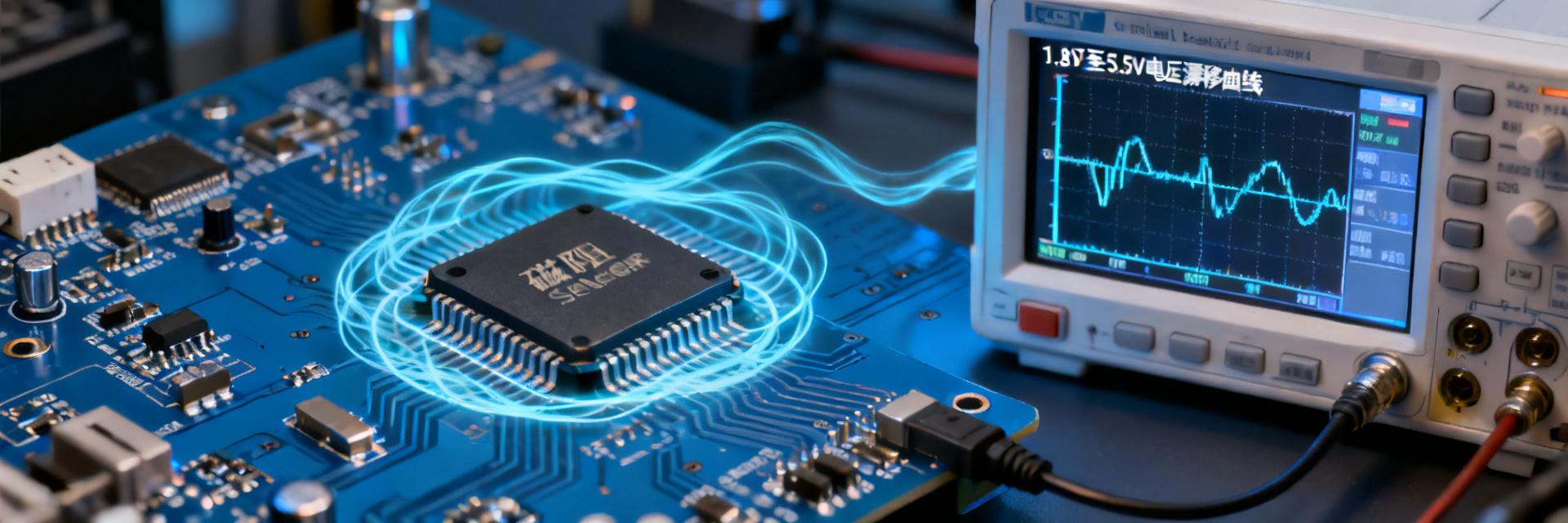
Between 1.8V low voltage and 5.5V high voltage, how much does the magnetic sensing threshold actually drift in Gs? This is the most troubling parameter blind spot for engineers when selecting KTM1305SC-LA4. Based on measured data, this article fully discloses the Bop/BRP drift patterns of this chip across the full voltage range for the first time, providing a quantitative basis for switch position detection design. KTM1305SC-LA4 Core Parameters and Test Schemes As an omnipolar magnetoresistive switch chip, KTM1305SC-LA4 features an operating voltage covering a wide range from 1.8V to 5.5V, mak…